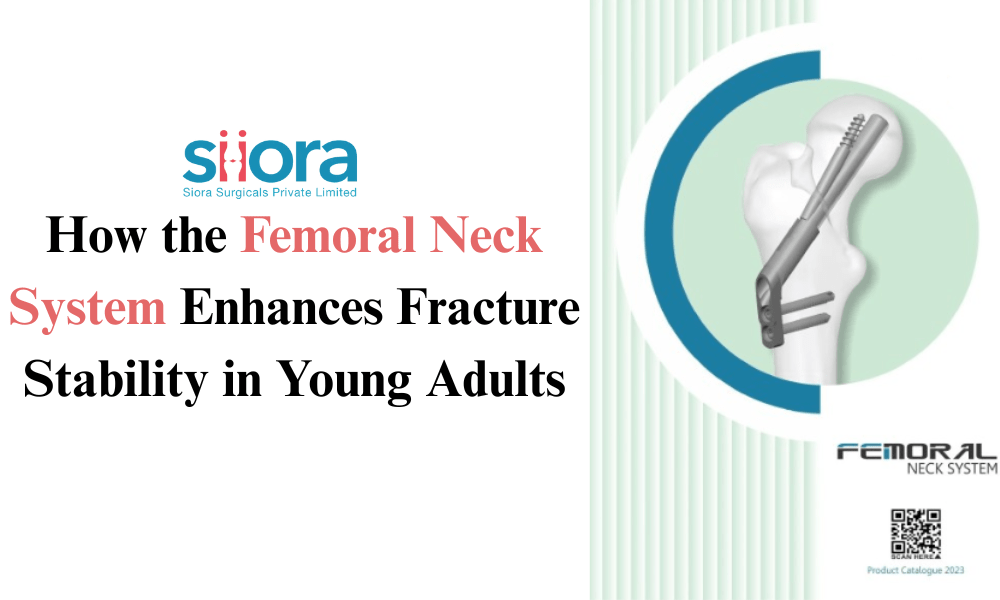
Fractures of the femoral neck, situated just below the ball of the hip joint, are often associated with older adults. However, these injuries also occur in younger populations, usually due to high-energy trauma like motor vehicle accidents or sports injuries. For active individuals in their 20s to 40s, the goal of treatment is not just healing, but restoring function, mobility, and long-term joint health. This is where the Femoral Neck System (FNS) comes into play. FNS is a modern solution designed specifically to enhance fracture stability and promote quicker, more reliable recovery.
Understanding the Challenge
The femoral neck is a unique and demanding anatomical site. It bears a significant portion of body weight and is under constant biomechanical stress. When a fracture occurs, especially in young adults with strong muscles and bones, the displacement can be severe. Traditional fixation methods like cannulated screws or dynamic hip screws may not always provide sufficient stability, leading to complications like non-union, implant failure, or avascular necrosis. For an active person, these outcomes can be devastating.
The Rise of the Femoral Neck System
The Femoral Neck System was introduced to address the shortcomings of conventional treatments. It represents a minimally invasive implant system that offers angular and rotational stability, two crucial elements in fracture healing. What sets the FNS apart is its biomechanically sound design, which combines the benefits of a locking plate and dynamic fixation in one system.
The core components of the FNS include a small locking plate, a central bolt, and an anti-rotation screw. Together, these components act as a single functional unit to counter the shearing and rotational forces that act on the femoral neck, especially during movement. This allows for secure fixation while preserving blood supply to the femoral head, which is vital for young adults who need to avoid avascular necrosis at all costs.
Improved Stability Through Intelligent Design
The enhanced stability provided by the FNS can largely be attributed to its intelligent design. The angular stability comes from the locking mechanism between the bolt and the side plate. This prevents the common issue of screw back-out, which can occur in traditional systems. Meanwhile, the anti-rotation screw adds another layer of support, ensuring the femoral head remains properly aligned during the healing process.
Additionally, the system allows controlled impaction at the fracture site, which promotes bone healing. The implant’s design reduces the micromotion that could otherwise disrupt healing or lead to implant failure. For younger patients who resume weight-bearing activities sooner, this is especially important.
Benefits for Young Adults
Young adults lead active lives and have higher demands when it comes to physical function. The Femoral Neck System supports these demands by enabling early mobilization and reducing the risk of revision surgery. Studies and early clinical data suggest that the FNS significantly lowers complication rates compared to traditional fixation methods.
Another key advantage is the minimally invasive nature of the procedure. Smaller incisions mean reduced soft tissue damage, shorter hospital stays, and faster return to daily life. For a 30-year-old recovering from a bike accident, these advantages are more than welcome; they can make the difference between months of immobility and a smooth, progressive return to normalcy.
A Step Forward in Orthopedic Care
In the grander scheme of orthopedic innovation, the femoral set reflects a shift toward patient-specific care. It acknowledges that not all femoral neck fractures are alike, and that younger patients have unique anatomical and functional needs. By offering a solution that is strong, smart, and biologically friendly, the FNS helps bridge the gap between mechanical support and natural healing.As orthopaedic implant technology continues to evolve, solutions like the Femoral Neck System are setting new standards for trauma care in younger populations. And for the patient, this means one crucial thing: a better chance at reclaiming life, mobility, and confidence, sooner and more securely than ever before.
 Site Title