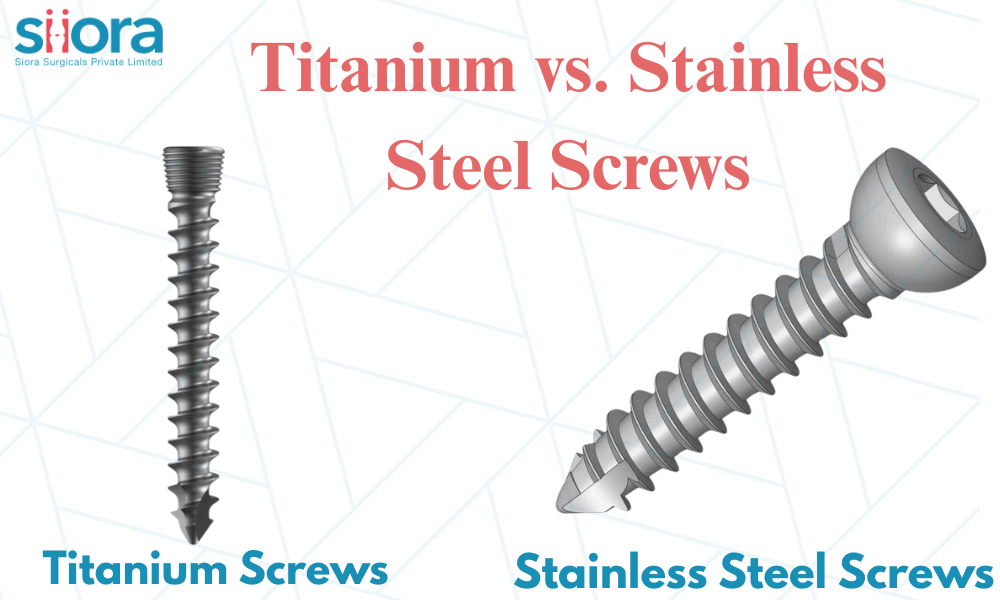
When it comes to choosing between titanium and stainless steel orthopedic screws, the answer isn’t as simple as picking the stronger metal. Each material has distinct properties that make it better suited for specific applications. Whether you’re working in construction, medical engineering, or manufacturing, knowing the performance differences between these two metals can help you make smarter decisions.
Strength vs. Flexibility
Stainless steel screws are known for their strength and hardness. They can take a beating and resist deformation under heavy load. This makes them ideal for applications where high mechanical stress is expected—think bridges, machinery, or building frames. Their high tensile strength also means they’re less likely to shear under pressure.
Titanium, on the other hand, isn’t as hard as stainless steel but offers superior flexibility and a much higher strength-to-weight ratio. This makes it ideal for environments where weight matters, such as aerospace components or sports equipment. Titanium can bend slightly under stress and return to its original form without cracking, which is a key performance trait in dynamic or vibrating conditions.
Corrosion Resistance
This is where titanium really starts to shine. Titanium screws are nearly immune to corrosion, even in harsh environments like saltwater or chemical processing plants. The metal naturally forms a thin layer of titanium oxide on its surface, which protects it from further oxidation and degradation. This makes titanium ideal for marine applications and any setting where long-term exposure to moisture or chemicals is expected.
Stainless steel also offers good corrosion resistance, especially higher grades like 316 stainless. However, it’s not on the same level as titanium. Over time, stainless steel can still corrode, especially if exposed to salt or chlorine. If corrosion resistance is a top priority, titanium is the safer bet.
Biocompatibility
For medical and dental use, biocompatibility is critical. Titanium is the gold standard here. The body generally accepts titanium well, which is why it’s commonly used for implants, surgical screws, and dental posts. It bonds with bone in a process called osseointegration, making it especially effective in long-term medical applications.
Stainless steel can also be used in the body, but it’s more likely to trigger allergic reactions or interfere with biological processes. Over time, stainless steel may corrode slightly in the body, releasing ions that can lead to inflammation or other complications.
Weight and Ease of Use
Titanium is much lighter than stainless steel, about 45% lighter, to be exact. This can be a major benefit in applications where reducing weight improves performance, such as in aerospace, sports gear, or wearable tech. That said, titanium is harder to machine. It wears down tools faster and takes longer to shape or cut.
Stainless steel is easier to work with. It’s more affordable to machine, weld, and install. If you’re working on a tight budget or deadline, stainless might be the more practical choice.
Cost Comparison
Let’s not ignore the price. Titanium is significantly more expensive than stainless steel. This cost often pays off in long-term performance and durability, but it can be a dealbreaker for high-volume or budget-conscious projects. Stainless steel offers solid, reliable performance at a lower upfront cost.
Final Verdict
So, which performs better? It depends on what you need.
- Choose stainless steel for high strength, lower cost, and ease of machining.
- Choose titanium for superior corrosion resistance, lighter weight, and biocompatibility.
If you’re designing components for structural use, stainless steel might be all you need. But if you’re working in high-performance or sensitive environments, like marine, medical, or aerospace, titanium is often worth the investment.In fact, titanium’s unique advantages make it the preferred material in trauma implants, where strength, lightness, and compatibility with the human body are non-negotiable.
 Site Title